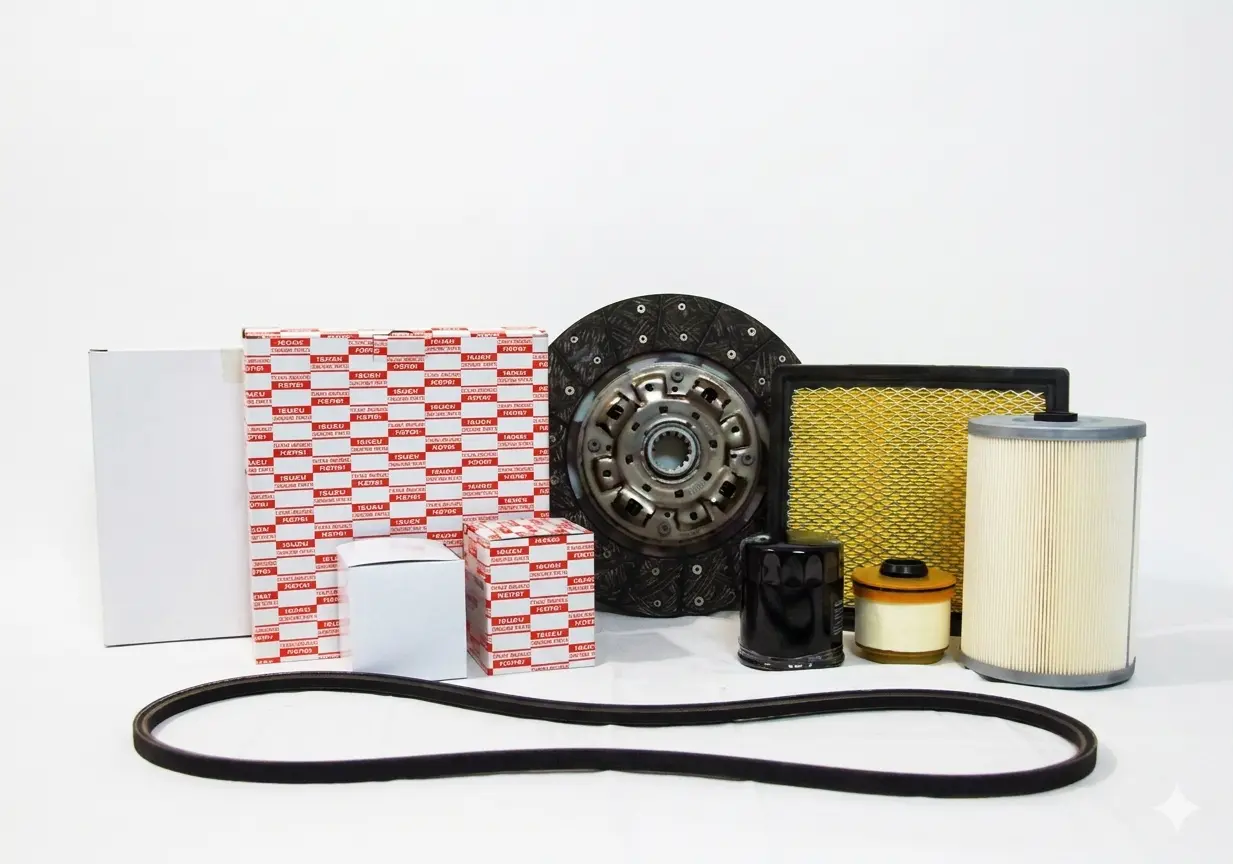
A service part is any component that wears out or degrades with use and needs periodic replacement to keep the engine, drivetrain, and safety systems working correctly. Unlike repair parts, which replace something that has already broken, service parts are replaced before they fail, precisely to prevent the far more expensive consequences of failure.
Understanding what each part does puts you in a much stronger position as a vehicle owner. You can have an informed conversation with your workshop, spot warning signs earlier, and understand why a technician is recommending a specific service at a specific mileage, rather than simply taking it on trust.
Why Service Parts Matter More in Kenya
Kenya's driving conditions place service parts under greater stress than manufacturer intervals were typically designed for. Most Isuzu service interval recommendations are set for European or Japanese road conditions, lower dust levels, better-quality fuel, smoother roads, and more moderate temperatures. In Kenya, several factors accelerate the degradation of service components:
- Dust and particulates: Murram roads and dry-season conditions in western Kenya dramatically shorten air filter life. A filter that might last 15,000–20,000 km in Japan can become critically blocked in 7,000–10,000 km on upcountry Kenyan routes.
- Fuel quality variation: Diesel quality in Kenya varies between suppliers and regions. Lower-quality or contaminated diesel accelerates fuel filter blockage and can damage fuel injectors over time. A fuel filter that traps contaminants is doing its job, but it fills up faster when fuel quality is lower.
- Heat: Higher ambient temperatures in Kenya's low-altitude regions and extended engine heat cycles accelerate the degradation of rubber components, coolant inhibitors, and brake fluid. Coolant and brake fluid that might last three years in a cooler climate need more frequent attention here.
- Load and terrain: Vehicles used for commercial loading, towing, or frequent rough-road driving stress drivetrain fluids significantly more than light passenger use. Gearbox and differential oils degrade faster under high load and heat cycles.
The Filters: Oil, Air, Fuel & Cabin
Filters are the vehicle's protection system against contamination. Each one guards a specific system, and each one has a specific consequence when it becomes blocked or degraded.
Engine Oil Filter
The oil filter removes metallic particles, carbon deposits, and combustion by-products from the engine oil before it circulates through the engine's oil galleries. A saturated oil filter bypasses contaminated oil directly into the engine, accelerating bearing and cylinder wear.
Air Filter
The air filter prevents dust, grit, and foreign particles from entering the engine's combustion chambers. On Kenyan murram roads, it is one of the most frequently underrated service items. A blocked air filter restricts airflow into the engine, reducing power and increasing fuel consumption. Severe blockage can also increase exhaust smoke and place additional strain on components such as the turbocharger over time.
Fuel Filter
The fuel filter protects the fuel injection system from the water, sediment, and particulates that can be present in Kenyan diesel. The injection system, particularly common-rail injectors, operates at extremely high pressure and has very tight tolerances. Contamination that passes a blocked or absent fuel filter causes injector wear and failure that is expensive to correct.
Cabin Air Filter
The cabin air filter cleans the air entering the vehicle's interior through the HVAC system, removing dust, pollen, and fine particulates. In Kenya's dusty conditions this filter can become blocked surprisingly quickly, restricting airflow to the cabin and forcing the blower motor to work harder. A blocked cabin filter also reduces air conditioning effectiveness noticeably.
The Timing System & Accessory Belts
Internal timing systems and drive belts are among the most critical items on any vehicle. They keep vital engine components synchronized and powered, but require careful attention under severe driving conditions:
Timing Chain (4JJ1 & 1.9L Blue Power)
Unlike engines that use rubber timing belts, core Isuzu powerplants like the 3.0L 4JJ1 and the 1.9L Blue Power utilize a heavy-duty steel timing chain system. This design is intended for long service life and does not have a scheduled replacement interval under normal operating conditions. However, the chain relies on properly functioning hydraulic tensioners supplied by clean engine oil to remain correctly tensioned and aligned.
If oil changes are delayed or incorrect oil is used, wear can accelerate on the timing chain, guides, and tensioners. Over time this may lead to chain stretch, startup rattles, or timing issues. Because these are interference engines, a skipped or failed timing chain can cause severe internal engine damage, including bent valves, damaged pistons, and expensive repairs.
Accessory / Serpentine Belt
The accessory belt (also called the serpentine or drive belt) powers components such as the alternator, power steering pump, air conditioning compressor, and on some models the water pump. While its failure does not usually cause immediate internal engine damage, snapping it will disable the alternator, increase steering effort on hydraulically assisted systems, stop the air conditioning, and may cause overheating if the belt also drives the water pump.
Signs of wear: visible cracking, fraying on the edges, glazed or shiny surface, or a squealing noise on cold start. Inspect it at every service and replace it before it reaches an advanced state of wear. A replacement belt is inexpensive; a roadside breakdown because of one is not.
The Fluids: Engine Oil, Coolant, Brake & Gearbox
Fluids do not just lubricate, they also transfer heat, protect against corrosion, and provide hydraulic force to critical systems. All fluids degrade with heat cycles and time, regardless of mileage.
Engine Oil
Engine oil lubricates the engine's moving parts, reduces friction, transfers heat away from critical components, and holds combustion by-products in suspension until it is drained. As oil ages, it loses viscosity, accumulates contaminants, and its additive package degrades. Old oil does not lubricate effectively and contributes to engine sludge formation over time.
Oil grade matters: always use the viscosity grade specified for your engine variant. Using the wrong grade, particularly an oil that is too thin, can reduce oil film strength at operating temperature, accelerating wear on bearings and cylinder walls.
Engine Coolant
Coolant (antifreeze) circulates through the engine and radiator to maintain operating temperature. Equally important, it contains corrosion inhibitors that protect aluminium and steel components in the cooling system, the radiator, water pump, head, and engine block. These inhibitors deplete over time. Old coolant becomes acidic and begins corroding the very components it is meant to protect.
A coolant flush involves draining the system fully, flushing with clean water, and refilling with fresh coolant at the correct dilution. It also provides an opportunity to inspect hoses, the thermostat, and the water pump for signs of deterioration.
Brake Fluid
Brake fluid is hygroscopic, it absorbs moisture from the atmosphere through the brake system's components and seals over time. As moisture content increases, the fluid's boiling point drops. In heavy braking situations, descending a long hill with a load, for example, brake fluid that has absorbed too much moisture can boil, forming vapour pockets in the brake lines. Vapour compresses; fluid does not. The result is a soft, spongy pedal and significantly reduced braking effectiveness.
This is not a theoretical risk. It is a predictable, preventable failure with a straightforward, inexpensive fix. Two years is the maximum interval for brake fluid regardless of how many kilometres the vehicle has covered.
Gearbox, Transfer Case & Differential Oils
The gearbox, transfer case, and differentials contain gear sets that operate under high load and generate significant heat. The gear oils lubricating them carry extreme-pressure (EP) additive packages that deplete over heat cycles. Degraded gear oil loses its ability to prevent metal-to-metal contact between gear teeth and bearing surfaces.
For vehicles used in commercial loading, towing, or frequent off-road work, all common use cases in western Kenya, these oils should be treated as higher-priority than the standard interval suggests. If the vehicle has been through a significant water crossing where water may have entered via the diff breathers, change the differential oil as soon as possible regardless of interval.
Quick Reference: Service Parts at a Glance
Use this table as a working reference. For precise intervals, always defer to your Isuzu owner's manual for your specific model year and engine variant, the table below is a general guide based on common Kenyan usage patterns.
| Part | General Interval | Kenya Adjustment | Criticality |
|---|---|---|---|
| Engine oil & filter | Per owner's manual | Stick to or shorten the interval in dusty/hilly conditions | High |
| Air filter | Inspect at 10,000 km | Can need replacement well before standard interval on murram roads | High |
| Fuel filter | Every 10,000–20,000 km | Shorten interval if using variable fuel sources | High |
| Cabin air filter | Every 15,000–20,000 km | Inspect more frequently in dusty conditions | Low |
| Timing Chain (4JJ1 / 1.9L) | No scheduled replacement interval | Maintain correct oil quality and service intervals to maximize timing chain life | Critical |
| Accessory belt | Every 40,000–60,000 km | Inspect at every oil service in dusty conditions | Medium |
| Engine coolant | Per coolant specification (typically 2–5 years) | Follow the coolant specification and inspect regularly in high-temperature operating conditions | High |
| Brake fluid | Every 2 years | No extension, 2 years is the maximum | High |
| Gearbox & diff oils | Every 40,000 km | Shorten for heavy commercial use or water crossings | Medium |
How Kenya's Conditions Change the Equation
The two conditions in western Kenya that most directly affect service part life are dust and load. Owners who understand this can make better decisions about when to inspect and replace parts rather than following a calendar blindly.
Dusty Conditions
Dust shortens the life of air filters, cabin filters, and accessory belts. If you regularly drive on murram roads, the Migori–Suna route, rural feeder roads, or upcountry tracks, inspect your air filter at every oil change and replace it based on condition rather than mileage. A filter that looks heavily grey-brown with visible dust loading should be replaced regardless of where it sits on the service interval.
Heavy Loading and Towing
Commercial loads, towing, and hill climbing generate heat in drivetrain fluids and accelerate their degradation. If your D-Max regularly carries a full load or tows equipment, treat your 40,000 km gearbox and diff oil service as a hard deadline rather than an approximate guideline. The extra cost of an earlier-than-necessary fluid change is trivial compared to differential or gearbox repairs.
Flood Season and Water Crossings
Western Kenya's rainy seasons bring flooded roads. If your vehicle has been through water deep enough to reach the axle level, check the differential oil at the next service for signs of water contamination, the oil will appear milky or watery. This requires immediate replacement and a check of the diff seals and breather.
Warning Signs You Should Never Ignore
Beyond the scheduled service items, your vehicle communicates problems through symptoms. These are the warning signs that correlate directly to service parts and should prompt an immediate workshop visit:
- Black smoke from the exhaust, Often indicates a blocked air filter, over-fuelling, or EGR issues. Can also indicate a failing injector. Persistent or excessive black smoke should not be dismissed as normal diesel behaviour.
- White smoke on startup (that persists past warm-up), While a brief puff during a cold engine start can indicate failing glow plugs, white smoke that continuously persists after the vehicle warms up indicates coolant entering the combustion chamber (head gasket concern) or water in the fuel supply. Worth diagnosing immediately.
- Spongy or low brake pedal, Indicates brake fluid contamination, air in the lines, or a failing master or slave cylinder. This is a safety item; do not drive until it is diagnosed.
- Squealing on cold start that disappears after a few minutes, Often a sign of an aging accessory belt, particularly in cold or wet morning conditions. The belt is glazed or cracking and needs replacement before it fails completely.
- Diesel smell from the engine bay, On high-mileage vehicles this can indicate injector return line deterioration. Have it inspected to prevent injector damage.
- Overheating gauge rising above normal, Stop immediately. This can indicate low coolant, a failing water pump, a blocked radiator, or a thermostat fault. Continued driving causes head gasket failure and severe engine damage.
- Rough idle, especially at traffic lights, Commonly linked to a blocked EGR valve or a dirty fuel injector. Addressable early at low cost; left unattended it leads to a more expensive repair.
Not sure where your service stands?
Bring your vehicle in for a service check. Our team will inspect the key service items and give you a clear picture of what is due and what can wait.