The Isuzu D-Max has earned its reputation on Kenyan roads the hard way, through years of proven performance across NGO fleets, farming operations, safari circuits, and everything in between. If you drive one, or are considering buying one, this guide gives you the honest, workshop-level picture: what makes it excellent, where it has known weaknesses, and what it actually costs to own properly in Kenya.
Why the D-Max Dominates Kenya
Three things set the D-Max apart in the Kenyan market: parts availability, resale value, and diesel efficiency. The 4JJ1 and newer 4JJ3 engines are widely understood by technicians across the country, from Nairobi to Kisumu and Migori to Kisii, which keeps labour costs reasonable even outside major towns.
The D-Max also benefits from a network of genuine Isuzu parts distributors with reliable supply chains. For fleet operators and commercial users, this predictability of supply and service cost is arguably as important as the vehicle's mechanical durability. A vehicle that cannot be repaired quickly is not a working vehicle.
On resale, the D-Max consistently holds value better than most of its competitors in western Kenya. A well-maintained example at 150,000 km retains significant market value, a reflection of buyer confidence in the platform.
Engine Generations at a Glance
The D-Max has gone through several engine generations in the Kenyan market. Knowing which engine your vehicle has is the foundation for correct servicing:
- 4JA1 (pre-2004): 2.5L naturally aspirated. Older, mechanically simpler, serviceable almost anywhere in Kenya. Robust but lower power than later units. Parts are still widely available.
- 4JJ1 (2004–2019): 3.0L turbodiesel. The engine most D-Max owners in Kenya know. Strong, proven, and widely understood. Available in single and twin-turbo configurations. Uses a timing belt, the most critical service item on this engine.
- 4JJ3 / 1.9 Blue Power (2020–present): More fuel-efficient, meets Euro 5 emissions standards. Uses a timing chain (no belt to replace). Requires more precise servicing with specific synthetic oils. Some variants have an AdBlue/SCR system.
What to Love About the D-Max
These are the genuine strengths of the platform, the reasons it has earned its reputation among Kenyan fleet managers, farmers, NGO operators, and private owners alike:
- The 3.0L 4JJ1 turbodiesel is extremely durable when serviced on schedule. We have seen well-maintained examples run past 350,000 km without internal engine work.
- Leaf spring rear suspension is simple, robust, and serviceable at any competent workshop. No complex multi-link geometry to worry about.
- Genuine Isuzu parts are available through our workshop and Isuzu dealers with no long lead times. This is a significant practical advantage over less common marques.
- Strong towing capacity, up to 3,500 kg on the double cab, makes it practical for serious commercial and agricultural use.
- High ground clearance and a capable 4WD system with low-range transfer case make it genuinely useful off-road, not just on appearance.
- The 4WD system uses a mechanical transfer case (not purely electronic), which is more repairable and durable for heavy use.
- Resale value across western Kenya is consistently strong, even at high mileage, provided service history is documented.
What to Watch: Known Issues
No vehicle is without its patterns. The D-Max has a set of issues that appear consistently in our workshop, particularly on vehicles operated in western Kenya's conditions. Being aware of these early is the difference between a Ksh 6,000 preventive fix and a Ksh 40,000 repair.
EGR Valve Carbon Build-Up
The Exhaust Gas Recirculation (EGR) valve is the most common service issue we see on D-Max vehicles with more than 80,000 km. On upcountry routes with dusty conditions, carbon deposits build up inside the valve, causing:
- Rough idling, especially noticeable at traffic lights
- Reduced power under load
- Occasional black smoke from the exhaust
- Check Engine light in more advanced cases
Solution: EGR cleaning at 80,000 km intervals costs Ksh 4,000–6,000 and prevents a full replacement (Ksh 14,000–18,000). Do not ignore rough idle symptoms.
Leaf Spring Fatigue and Shackle Wear
Vehicles used for heavy loading, particularly agricultural and construction use, accelerate leaf spring fatigue significantly. Signs to watch for include the rear end sitting noticeably lower than when new, clunking noises over speed bumps, and uneven tyre wear at the rear axle.
The shackle bushings that allow the springs to flex are a common wear item. Replacing bushings is far cheaper than replacing full spring packs, and catching them early prevents accelerated spring damage.
Injector Return Line Leaks
On high-mileage D-Max vehicles (typically 120,000+ km), the rubber banjo fittings on the injector return lines develop micro-cracks. Symptoms: a diesel smell in the cabin, visible wetness or staining around the injector area under the bonnet, and minor power loss. This is a relatively inexpensive repair if caught early. Ignored, it can cause the engine to run lean and damage the injectors themselves (Ksh 20,000–40,000 each).
Front Differential Oil Contamination (4WD Models)
On 4WD D-Max variants used on routes with river crossings or flooded roads, the front differential is susceptible to water ingress through the breather or seals. Contaminated diff oil looks milky or has a watery consistency. This must be addressed immediately, because water in a differential causes rapid bearing and gear wear. Change the diff oil after any significant water crossing.
Glow Plug Failure on Cold Starts
In Kenya's highland regions and during the cold seasons, failed glow plugs make cold-morning starting difficult on the 4JJ1. Symptoms include hard starting from cold, rough running for the first few minutes, and white smoke on initial warm-up. A full set of four glow plugs costs Ksh 4,000–7,000 to replace, and it is always worth replacing all four simultaneously.
Full Service Schedule
The schedule below applies to the 4JJ1 (3.0L) engine, the most common D-Max engine on Kenyan roads. Use the mileage trigger, and always apply the time trigger (whichever comes first) for fluids that degrade with age regardless of use.
| Interval | Service Items | Estimated Cost (Ksh) |
|---|---|---|
| Every 5,000 km | Engine oil and filter change (use 5W-30 or 10W-40 diesel-rated). Check all fluid levels. | 3,000 – 5,500 |
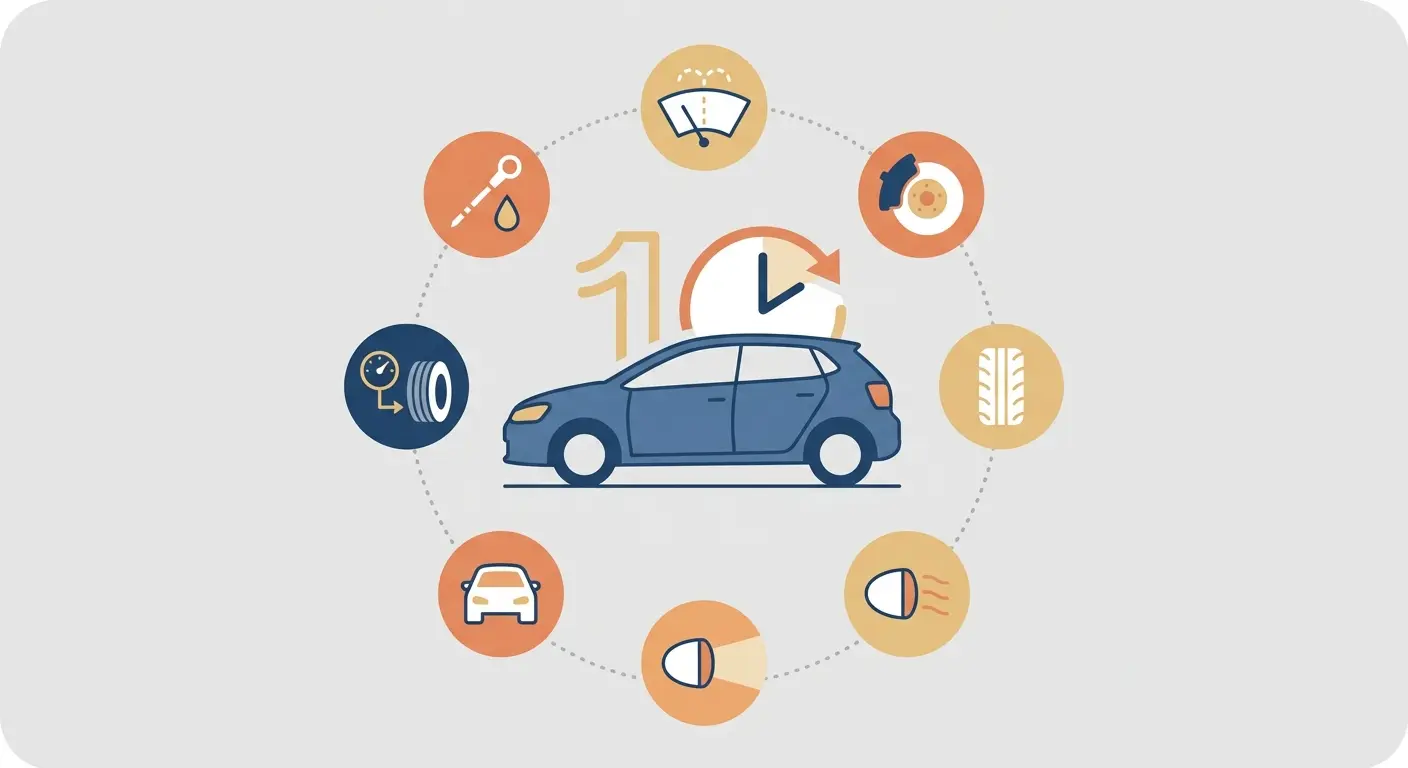
| Every 10,000 km | Fuel filter replacement. Air filter inspection (replace if blocked). Tyre rotation. Inspect brake pad thickness. | 3,500 – 6,500 |
| Every 20,000 km | Replace fuel filter (mandatory if not done at 10K). Inspect EGR valve. Check injector return lines. Inspect all rubber hoses and belts. | 5,000 – 8,000 |
| Every 40,000 km | Gearbox oil. Transfer case oil. Front and rear differential oil. Replace alternator/serpentine belt. Inspect spark plugs (N/A for diesel). | 8,000 – 14,000 |
| Every 2 years (regardless of mileage) | Brake fluid flush and replacement. Coolant flush and replacement. Inspect and lubricate all chassis grease points. | 4,000 – 7,000 |
| Every 80,000 km ⚠ Critical | Timing belt replacement (with tensioner pulley and water pump). EGR valve service. Full coolant system flush. | 18,000 – 25,000 |
Genuine vs Aftermarket Parts: What to Know
This is one of the most common questions we get, and the honest answer is that it depends on the component. Here is the practical breakdown:
Always Use Genuine Isuzu Parts For:
- Timing belts, tensioners, and timing components
- Fuel injectors and injection system components
- EGR valves
- Head gaskets and engine seals
- Turbocharger units (or quality remanufactured with manufacturer warranty)
- Gearbox and transfer case synchronisers and bearings
Quality Isuzu Select (Aftermarket) Is Acceptable For:
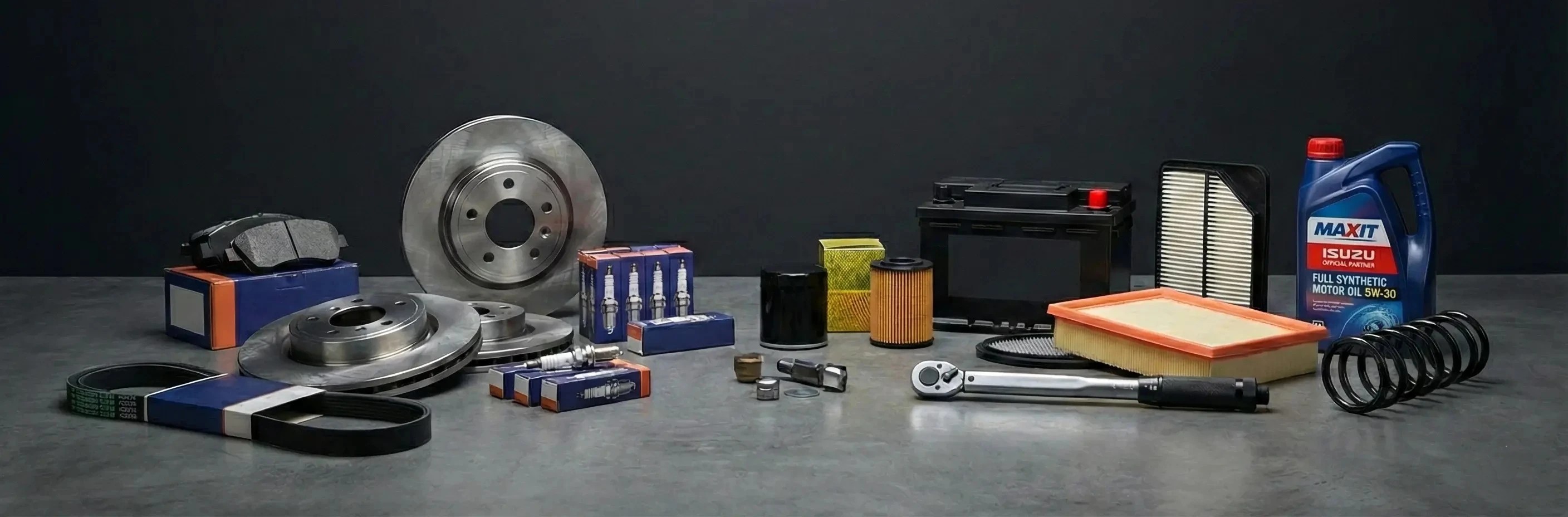
- Brake pads and discs (from reputable brands: ATE, Brembo, Nisshinbo)
- Oil, fuel, and air filters (OEM-equivalent from established suppliers)
- Suspension bushings and shock absorbers
- Wiper blades, cabin air filters, and bulbs
- Serpentine/accessory belts (not timing belts)
Real Ownership Costs in Kenya
Transparency on costs matters. Here is what you should realistically budget for a D-Max 4JJ1 in western Kenya, based on vehicles we service regularly:
- Annual oil service (2× per year at 5,000 km intervals): Ksh 6,000–11,000 per year
- Full annual service (oil, filters, inspection): Ksh 8,000–14,000 depending on model year and what needs replacing
- Timing belt service (every 80,000 km): Ksh 18,000–25,000 including tensioner and water pump. This is the most important single spend in the vehicle's life.
- EGR cleaning (when needed, typically 80,000 km): Ksh 4,000–6,000
- Brake service (pads and discs, when worn): Ksh 12,000–22,000 for a full axle
- Leaf spring and suspension refresh (if heavily used): Ksh 15,000–35,000 depending on what is needed
- Gearbox and diff oil service (40,000 km): Ksh 8,000–14,000
Total annual maintenance budget for a well-maintained D-Max doing 20,000–30,000 km per year: Ksh 25,000–45,000. This is the cost that protects a vehicle worth Ksh 3–7 million. The maths strongly favours proactive maintenance over deferred repairs.
Pro Tips from the Workshop
These are the practical observations our technicians have accumulated from servicing hundreds of D-Max vehicles across western Kenya:
- Tip 1. Baseline inspection on used purchases: If the service history is unknown, treat every consumable as overdue. The timing belt especially: a phone call to our workshop costs nothing; a broken belt at highway speed costs everything.
- Tip 2. Check injector return lines at 100,000 km: Ask your technician to specifically check the rubber banjo fittings on the return lines at your next service if the vehicle is over 100,000 km. Takes five minutes, can prevent a Ksh 30,000+ injector replacement.
- Tip 3. Change diff oil after river crossings: If you have crossed a flooded section or driven through standing water deep enough to reach the diff breathers, change the differential oil within the next service, regardless of where it sits on your schedule.
- Tip 4. Do not skip the coolant flush: Degraded coolant loses its anti-corrosion inhibitors. In Kenya's temperature extremes, corroded radiators and water pumps are a predictable consequence of skipping this service. Two years or 60,000 km, whichever comes first.
- Tip 5. Document your service history: A D-Max with a documented service book sells for 10–15% more than an identical vehicle without one. Keep records, even informal ones. Our workshop provides a written report with every service.
- Tip 6. Tyre rotation matters more on leaf-spring pickups: The stiff rear suspension causes tyres to wear differently front to rear. Rotating every 10,000 km extends tyre life significantly and gives you early warning of alignment issues before they become expensive.
Need a D-Max service or inspection?
Our certified Isuzu technicians in Migori are ready to help. Book a service or call us to discuss your vehicle.